Tuesday, February 19, 2008

Food Storage/Preservation - 2007


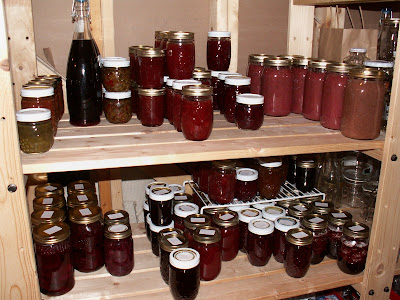
In past years, we've had great trouble storing our veggies after harvesting them. However, after last season through dumb luck or trial and error, we finally were able to store things for extended periods of times. We're still eating onions, carrots, and leeks harvested last year. And of course we also have a lot of jam that were made throughout the fall. Here's a list of everything we grew, how they did, what we did to store them, and how some of them performed after being stored. Looking at the list, we just realized we had a pretty busy year - and a pretty good crop of most things. Not bad for a city lot...

Apples

  • Our trees are still quite young, and were ravaged by deer early on, so this was the first year that we got any apples, and we only harvested about four of them - a couple of McIntosh and a couple Braeburn(?). All of them were good - though a bit small. There were not enough to store.

Pears

  • This was the first year that we got any pears, and we only harvested 1 (damn deer!) - not enough to store.

Plums

  • There were no plums this year. Apparently, this is a common problem with plums. the tree grew well, though, and didn't really get eaten too much by the deer.

Berries

  • Strawberries: We had a great harvest, though not quite enough for jam, so we picked about 24 pounds at a local produce farm (Allen's Allenville Produce). Berries were cleaned, rinsed, then frozen.
  • Raspberries: Starting to come, though we had to pick additional berries up in Sherwood to support jam production. Berries were rinsed, then frozen once they were picked. We would just keep a bag in the freezer and add berries as we picked them from the garden.
  • Blackberries: Harvested enough berries to make a few jars of jam. Berries were rinsed, then frozen.
  • Blueberries: No berries were harvested - need to cage them from the rabbits and deer, and provide more sulfur. Probably should re-do that bed to better support both the rhododendrons and blueberries.
  • Rhubarb: all the plants are producing nicely. We had ample rhubarb to make strawberry-rhubarb jam, as well as several jars of rhubarb compote. Rhubarb was cleaned, diced, then frozen.

Beets

  • Beets were harvested and cleaned.
  • We had some trouble with an animal (perhaps rabbits) eating the leaves and tops of the beets that were above-ground.
  • 90% of the beets were then pickled the same weekend that they were harvested.
  • The other 10% were stored in the Dutch oven pan - kept cool and dark - and eaten for dinners. The beets kept well this way for a couple of weeks. They could probably also be stored outside in the stairwell.

Carrots, Leeks, Potatoes

  • Oct 14, 2007: Filled a large wheeled Rubbermaid container with peat moss and moistened with water (the six-year-old really got a kick out of the 'treasure chest', as she called it). This was stored in the garage stairwell down to the basement (constant temperature and fairly dark).
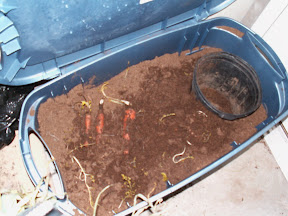


  • Carrots: Removed the tops and buried them in the damp peat moss.
    • Some of the carrots in the peat moss started to sprout again early on.
    • The late harvested carrots had their tops removed and were dumped into a large plastic tub and covered with leeks. Nothing else was done to them, and no peat moss was used. They were moved to the bottom of the stairwell after we had some significant freezing temps in the garage.
    • Carrots were still good on Feb 19, 2008.
  • Leeks: Removed/trimmed half the roots and leaves
    • Layered some on top of the peat moss
    • Placed some in a shallow bucket in the peat moss
    • Buried some in the peat moss - some of these started to grow again early on.
    • The last harvested were dumped into a large plastic tub bucket on top of carrots with a piece of burlap loosely thrown on top to nominally keep moisture in the tub. There was no peat moss in the tub, and nothing special was done.
    • Leeks were still good on Feb 19, 2008, but we're seeing quite dry leaves on the outer layers.
  • Potatoes: stored them in a bucket that was nestled in the peat moss, and a thin layer of peat moss covered the potatoes.
    • We finished the potatoes in Jan, 2008. They were still good. We're planning more potatoes for this year.

Celeriac

  • No celeriac were harvested this year.

Chili Peppers

  • Strung them and hung them to dry over the freezer in the basement. Within 2 weeks started to have problems with mildew.
  • Oct 14, 2007: cleaned chilis, cut in half lengthwise, removed seeds and dried them in the oven on lowest setting for about 2 hours. The chilis were rubbery when they came out. Allowed to cool off and then stored them in a Ziploc bag in the cabinet.

Green Peppers

  • These were eaten as soon as they were harvested.

Garlic

  • These were cured in the sun in the screened in porch and eaten within a month.

Onions

  • Onions were cured in the screened-in porch in Aug/Sep 2007.
  • After curing they were sorted by type, and stored in the two small folding boxes in the gardening area of the basement.
  • Onions were eaten in the following order: white, red, yellow.
  • Feb 19, 2008: We still have a couple of red onions left. The yellow onions are still good, though we are starting to find ones that are going mushy or sprouting. Throughout the winter we have periodically sorted through the onions and removed any mushy ones.
Pumpkins

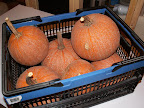
  • Pumpkins were harvested in October and cured in the screened in porch.
  • Whole pumpkins were then stored in a folding box in the basement.
  • Feb 19, 2008: Seven pie pumpkins remain and appear to still be good.


Salad

  • Salad was eaten shortly after harvest. Need to plant more at 2-week intervals throughout the summer.

Spring Onion

  • These were eaten shortly after harvest.

Tomatoes

  • Ripe tomatoes were washed, dried, and any black spots cut off before being sliced into quarters and stored in Ziploc bags in the freezer. Like the raspberries, this was done continuously as we were unable to keep up with eating them fresh.

Zucchini

  • Mature zucchini were cut from the vine and successfully stored in a plastic bag in the refrigerator for up to two weeks (and some were given away to friends and coworkers - and then we gave away some more - maybe we'll go down from two to one plant next year).

Finished Products

As we were harvesting we used the fresh produce to prepare finished meals and breads that were then frozen or eaten that day. Most items were doubled so that we had a meal that day, and one to put in the freezer.

  • Potato Leek Soup
  • Gullasch Soup
  • Carrot Salad
  • Squash Rolls - a whole grain dinner roll
  • Carrot Rolls - a whole grain dinner roll
  • Zucchini Bread - a sweet cake-like bread
  • Applesauce Muffins - made with apples from a colleague
  • Leek Quiche
  • Lasagna with Shredded Zucchini
  • Turkey Soup - cooked from the leftover turkey carcass
  • Veggie Soup Mix - combination of blanched leek, carrot, and celeriac (when available) for use in soups throughout the winter

Monday, February 18, 2008

Snow, Snow, and More Snow!

The last two days we have received 10" of snow (following a half inch of ice), bringing us within striking distance of the season record for snowfall. The snow is now so deep that anytime the wind blows (seems like all the time!) - the valleys we used to call sidewalks and the front walk get completely filled with snow above the intake for the snow blower. Not too bad the last couple days since it's been very soft and loose snow that just falls down behind the snowblower and can be cleared on the next pass. I've cleared snow four times over the last two days - and I'll probably have to be back out tomorrow morning.

All this snow ought to give good moisture for the garden - even thought it's pretty hard to imagine doing any gardening right now. It'll probably be April before the snow melts at this rate.

Well, we've ordered the seeds (more on this in a later post), so at least we're thinking about it...

Stay warm!
Posted by Picasa

Wednesday, February 13, 2008

Are you Ready for Earth Hour 2008?


We wrote earlier about Lights Out America. The movement to turn off all non-essential lights at 8 pm on March 29, has changed its name to Earth Hour, and is a very global event modeled on the successful Sydney event last year.

Spread the word today!

Tuesday, February 12, 2008

Garbage-reducing Partnership

One of Kim's colleagues is also an artist who melts down beer and wine bottles (see an example of her work in the picture). The bottles are great decorations - ours is in the kitchen (of course!).

We've had the bottle for a couple of years and enjoyed it, but recently we expanded the collaboration, since she had some dark beer that she didn't like, but she wanted the bottles for decorations. So, she asked us if we would be willing to drink the beer - are you kidding? Free beer? Of course we said yes. She will take any wine bottle we drink, so now we won't need to recycle wine bottles any more.

Partnerships are great!
Posted by Picasa

Monday, February 11, 2008

Trashblogging ... no litterally!

There's a lot of trash talk in the blogosphere, but I didn't realize until the other day that there's also a ton (literally too!) of literal trash blogging going on - blogs that are entirely devoted to the topic of trash! I first found out about this in a CNet News article on bloggers saving, weighing, and writing about their trash. It seemed pretty extreme - one guy saved all his trash for a year! And then blogged about it at Save Your Trash. And we were beginning to think we were a bit extreme... Then again, there's a long way from Wisconsin to California...

Then there's Beth over at Fake Plastic Fish, who goes to great length eliminating plastic trash - even recyclables - and then keeps whatever she does generate. She keeps a running tally of all plastic items she's discarded (868 items weighing 13.5lb since June 2007). She's very similar to EnviroWoman - a self declared WhackedOutEcoFreak who also keeps all plastic and loudly declares not to use any plastic (although it's hard).

The CNet piece also covers 'Compactors' who never buy anything new...

Well, we don't keep our trash in bins in the living room, but most of the advice contained in these blogs are relevant and sensible. For instance, Save Your Trash had a nice summary post with good advice on things we've blogged about as well: Use a reusable coffee mug and bring your own grocery bags. He also has good advice we haven't talked about here: Use a reusable plastic bottle and bring your own container to restaurants to bring home leftovers.

Even though some of those bloggers are a bit extreme, the point they're making is poignant: We produce an awful lot of trash in this country (and throwing it away, doesn't really make it 'go away' - it's just moved somewhere else). So anything we can do to reduce this problem should be well worth it.

Tuesday, February 5, 2008

Going Green - for the masses

We just discovered the National Geographic Green Guide - a magazine "Written for general consumers, not for enviromaniacs". In addition to the $15/4 issue magazine, they also have a great web site chock full of buying guides, articles, tips, tricks, even a half dozen blogs.

Haven't explored it entirely yet, but everything seems to be very accessible and down to earth. Heck, any web site that talks about brewing beer as an environmental solution, should be commended!

Wednesday, January 16, 2008

Status on Our Sustainable Efforts

Recently, someone at corporate at Kim's work questioned whether consumers would be willing to spend extra money on things they didn't perceive to have a direct health benefit (i.e. spending money on carbon credits to avoid something bad perhaps happening in a number of years. Here's Kim's response, which nicely sums up a lot of our efforts over the past couple of years (except for food, which of course is another major focus for us):

Thanks for bringing this to the attention of those in Dallas that people really are willing to pay more for items they believe to be sustainable. My family is currently working to increase our use of sustainable practices and decrease our carbon footprint.

With this in mind, over the last three years we have:
  • Built a new house which was pre-built in a warehouse. By pre-building sections of the house in a warehouse less wood is consumed and wasted – everything can be pre-measured and the small sections of the 2x6s that are left over are used elsewhere in the construction. We paid a bit more for this, but felt that by doing so we reduced the impact on our forests. The house is two stories with a finished basement, and overall living space is 3500 square feet.
  • All ceiling lighting (not floor lamps – yet!) utilizes CFLs.
  • Outdoor security lighting is tied to a solar panel and timer to turn on and off throughout the year.
  • About 6 months ago we started purchasing green energy form our local energy company. We purchase enough green energy to off-set all our electric needs.
  • Since we are not yet ready to buy a hybrid car (which our next one will most certainly be), we are purchasing carbon credits to off-set the gas that we purchase for both vehicles each year.
  • We have invested in prairie plants and built rain gardens in our yard to keep the run off form our roof on our property and out of the storm sewers. The upfront cost of a rain or prairie garden is a bit higher than for your traditional garden plants, but well worth the investment.
Future plans:

  • We plan to add additional rain gardens as well as rain barrels to our city lot to decrease the amount of city water we need to pull from the lakes and water table.
  • We are currently looking into solar energy panels and what it would cost to install them, as well as what our ROI would be.
  • As an alternative to solar energy, we are looking into solar water heating as well. The up front costs are lower and the ROI is better, so this may be our entry point into the world of solar. Before we can install any solar, however, we need to get plans drawn up which need to go before a review committee for our neighborhood, and we need to get he covenants changed to allow solar panels. Neither of which will be easy, however we feel it will be well worth the battle.
  • I recently found out about “paper plates” and “plastic-ware” that is biodegradable and (I believe) corn based. Instead of throwing it in the garbage after your July 4 picnic, you can just throw everything into the compost bin. We will definitely be using them the next time we plan a picnic gathering!